You can learn touch typing online for free in about a month if you practice 15 minutes a day on the right site. This guide picks the best free typing websites for each stage (learning the keys, building accuracy, then speed), explains how to read your WPM score, and gives a simple 30 day plan that takes most people from hunt and peck to 40 plus words per minute. Every site below was checked in August 2026 and is free to use without installing anything.
Short version: start with TypingClub or Typing.com for lessons, move to Keybr for accuracy, then use Monkeytype daily for speed. Test yourself once a week on 10FastFingers or the LiveChat test.
How typing speed is measured (WPM)
Typing tests count a “word” as five characters, including spaces, so WPM is characters typed divided by five, divided by minutes. Most sites also report accuracy and sometimes a net WPM that subtracts errors. Rough benchmarks:
| WPM | What it means |
|---|---|
| 20 to 30 | Hunt and peck, looking at the keyboard |
| 40 | Average office worker, what most job listings ask for |
| 60 to 70 | Comfortable touch typist, no longer thinking about keys |
| 80 to 100 | Fast; programmers and writers who type all day |
| 120 plus | Competitive typing territory |
Accuracy matters more than speed while you are learning. A 95 percent accuracy at 40 WPM beats 60 WPM at 85 percent, because every error costs you two keystrokes to fix.
Best websites to learn typing from scratch
These teach finger placement lesson by lesson. Pick one and finish it; they overlap heavily.
TypingClub
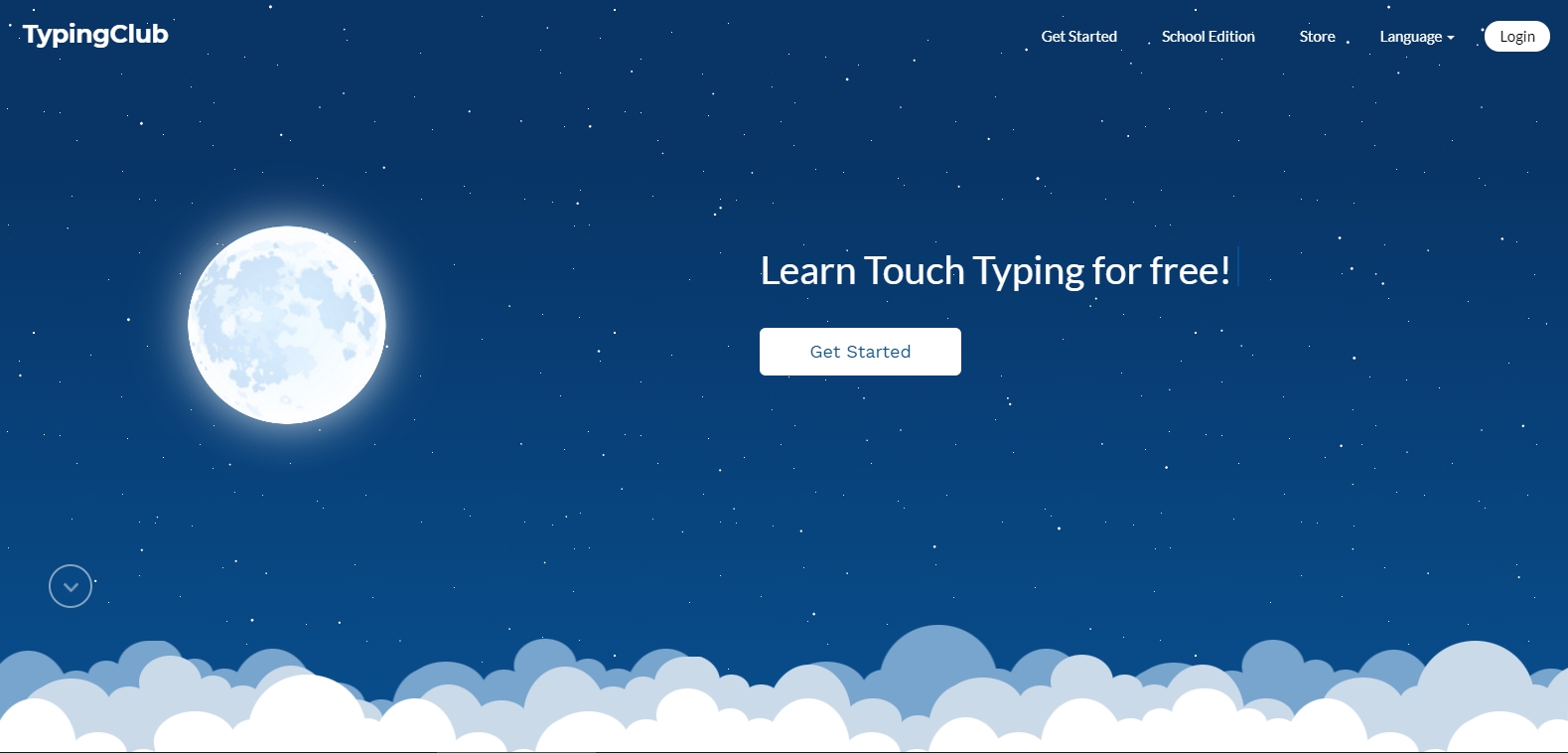
TypingClub has the most complete free curriculum: 600 plus short lessons that introduce two keys at a time, with a hand animation showing which finger to use and a star rating for each attempt. Progress saves to a free account. Schools use it, which is why it stays free; the paid version only removes ads and adds teacher reports. Best pick if you have never touch typed.
Typing.com
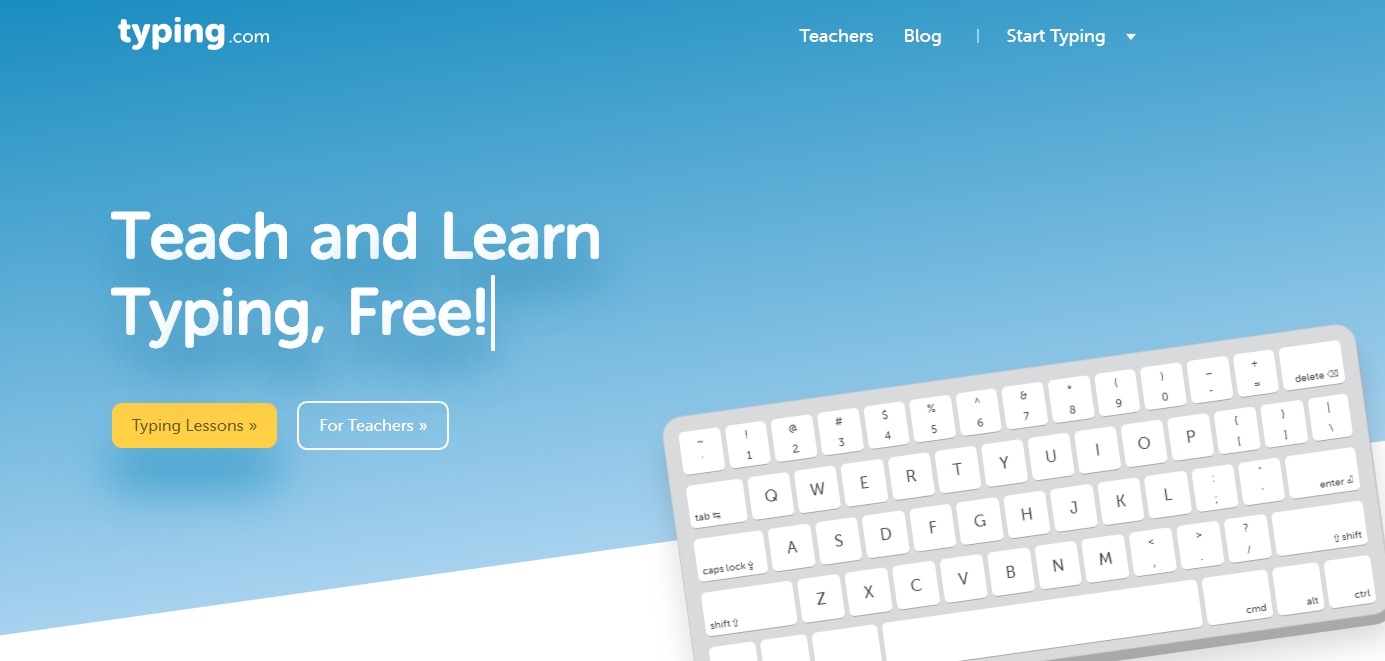
Typing.com covers the same ground as TypingClub with a cleaner interface and courses split into beginner, intermediate and advanced, plus a separate track for the number pad and one for coding characters. It also has a proper typing test and a few games. Free with ads; choose it over TypingClub if you prefer its look, the results are the same.
Typing Study
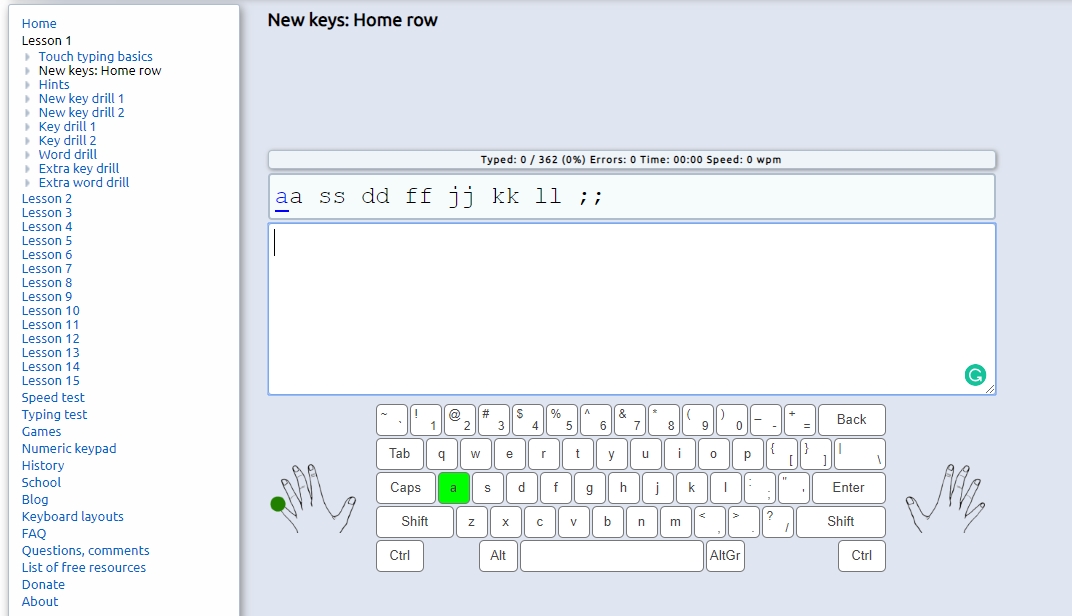
TypingStudy is plainer but supports far more keyboard layouts and languages than the two above, including Dvorak, Colemak and non Latin scripts. Use it if you are learning to type in a language other than English or on a non QWERTY layout.
Best websites to build accuracy
Keybr
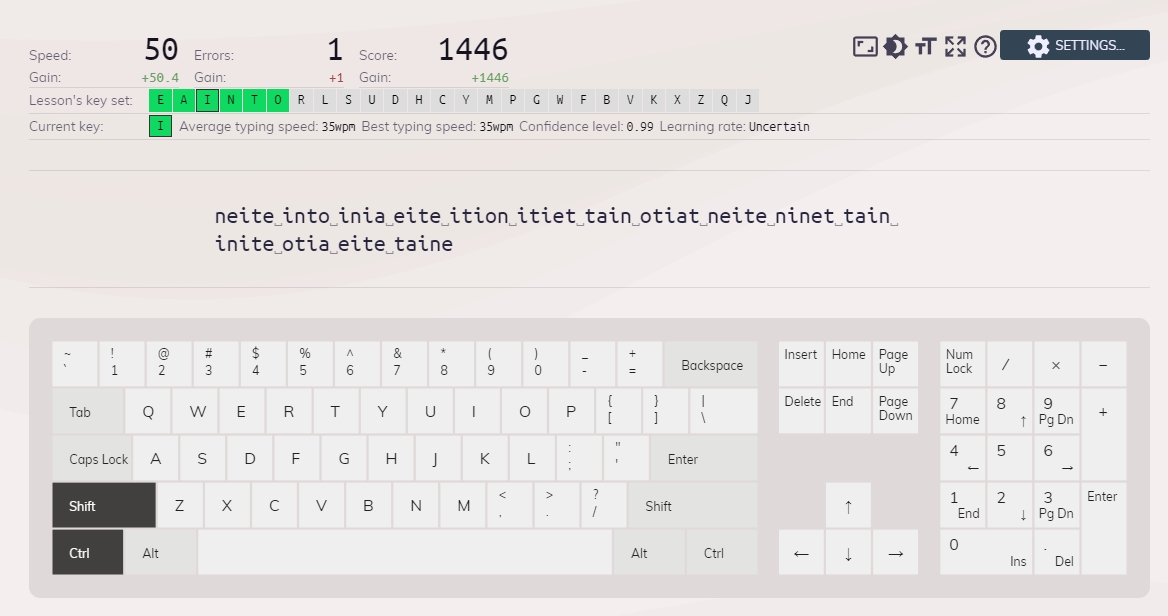
Keybr does not use lessons. It generates made up words from the letters you have unlocked, watches which keys slow you down, and feeds you more of those. It unlocks a new letter only when you are fast and accurate on the current set. This is the fastest way to fix bad habits from years of two finger typing, and it is completely free with no account needed. Spend two to four weeks here after finishing the basic lessons.
Typing Bolt
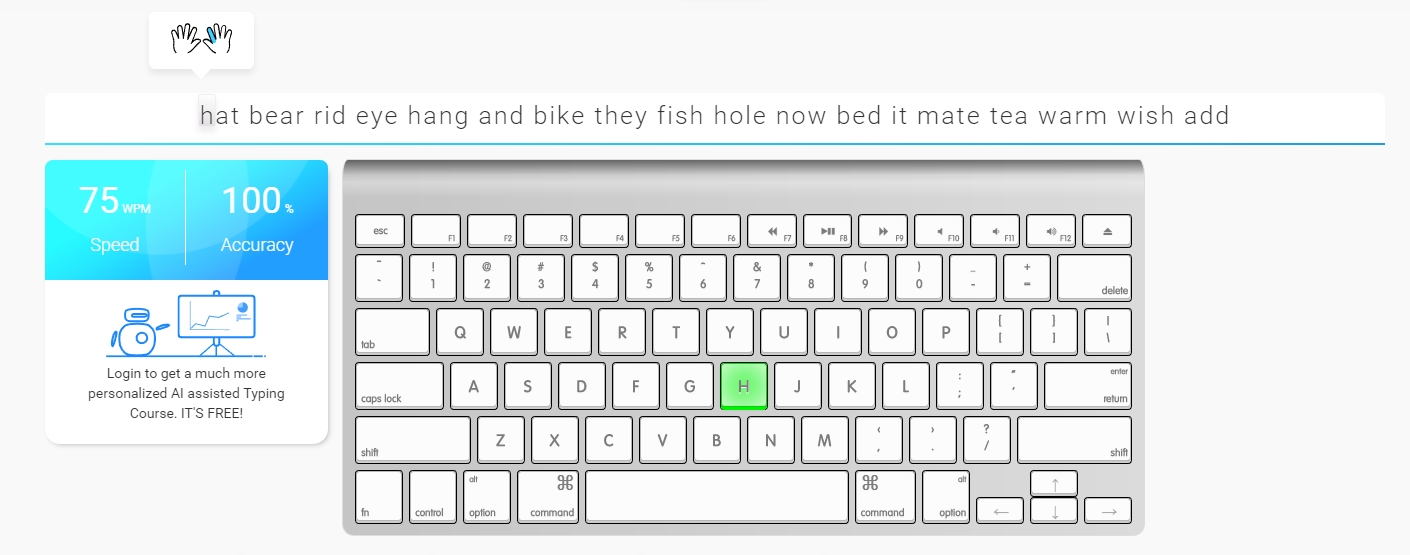
Typing Bolt works on the same idea as Keybr, adapting the words to your weak keys, but with real English words instead of generated ones. Good second option if Keybr’s nonsense words annoy you.
Best websites to build speed
Monkeytype
Monkeytype is the site most fast typists practice on. A minimal screen, a timed or word count test, and detailed stats after each run: raw and net WPM, accuracy, consistency, and a graph of your speed over the test. You can switch between common English words, quotes, numbers and punctuation, and pick from dozens of themes. Free, no account needed, though an account saves history. Once you can touch type, this is where daily practice happens.
10FastFingers
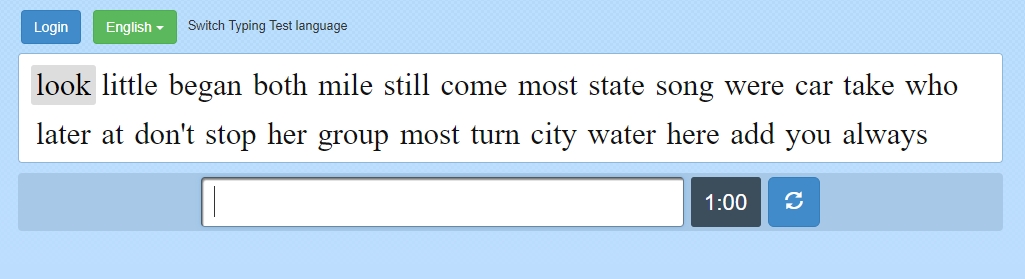
10FastFingers is the classic one minute test using the 200 most common words in your language, available in more than 50 languages. Good for a weekly benchmark because the word set never changes, so your scores are comparable over time. It also runs multiplayer competitions.
TypeRacer
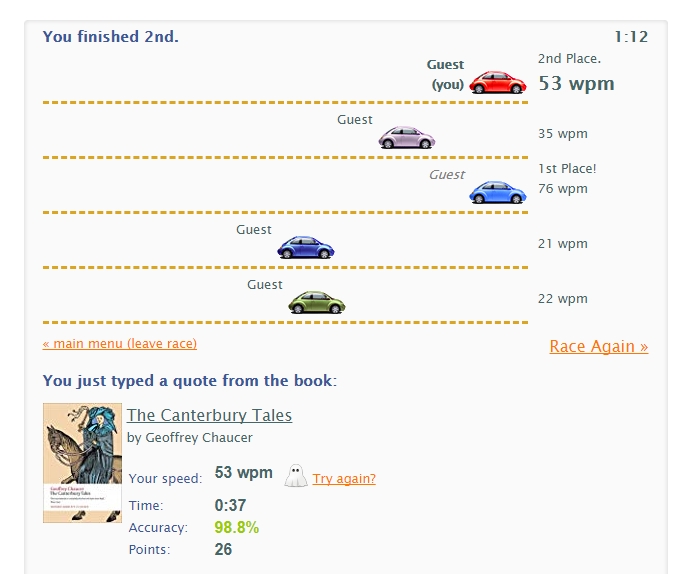
TypeRacer turns typing into a car race against other people typing the same quote. The competition is what keeps people coming back; you will type faster than in a solo test just from the pressure. Free with an optional account for rankings.
TyprX
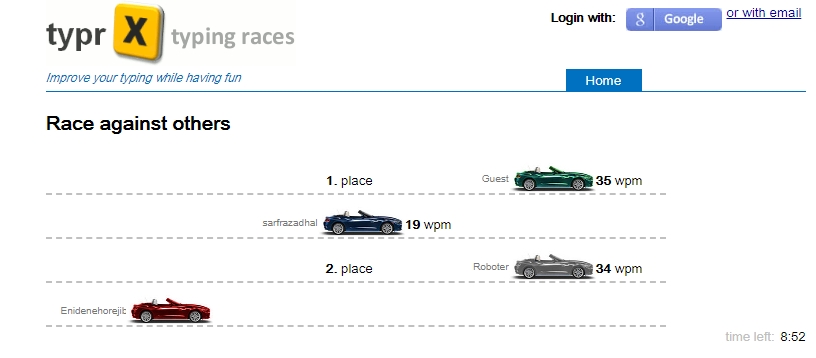
TyprX is a smaller TypeRacer alternative with private races, useful for classrooms or friends who want to compete without random players.
Typing games that actually teach
ZType
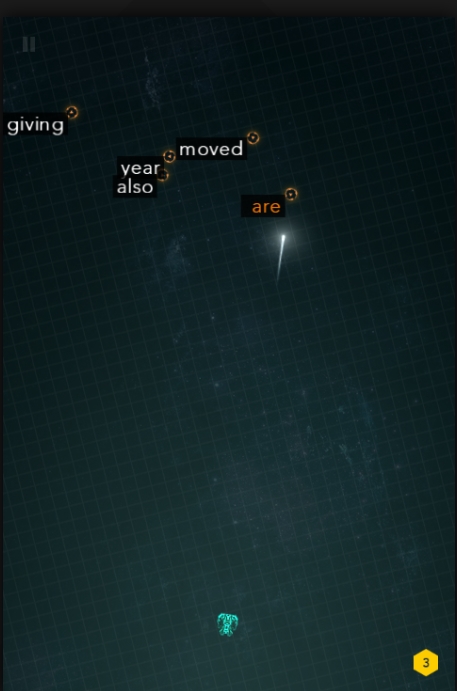
ZType is a space shooter where each incoming ship has a word on it and you type the word to destroy it. Works in the browser, no install, and it is genuinely good for speed on random words. You can paste your own text to play against.
Epistory: Typing Chronicles
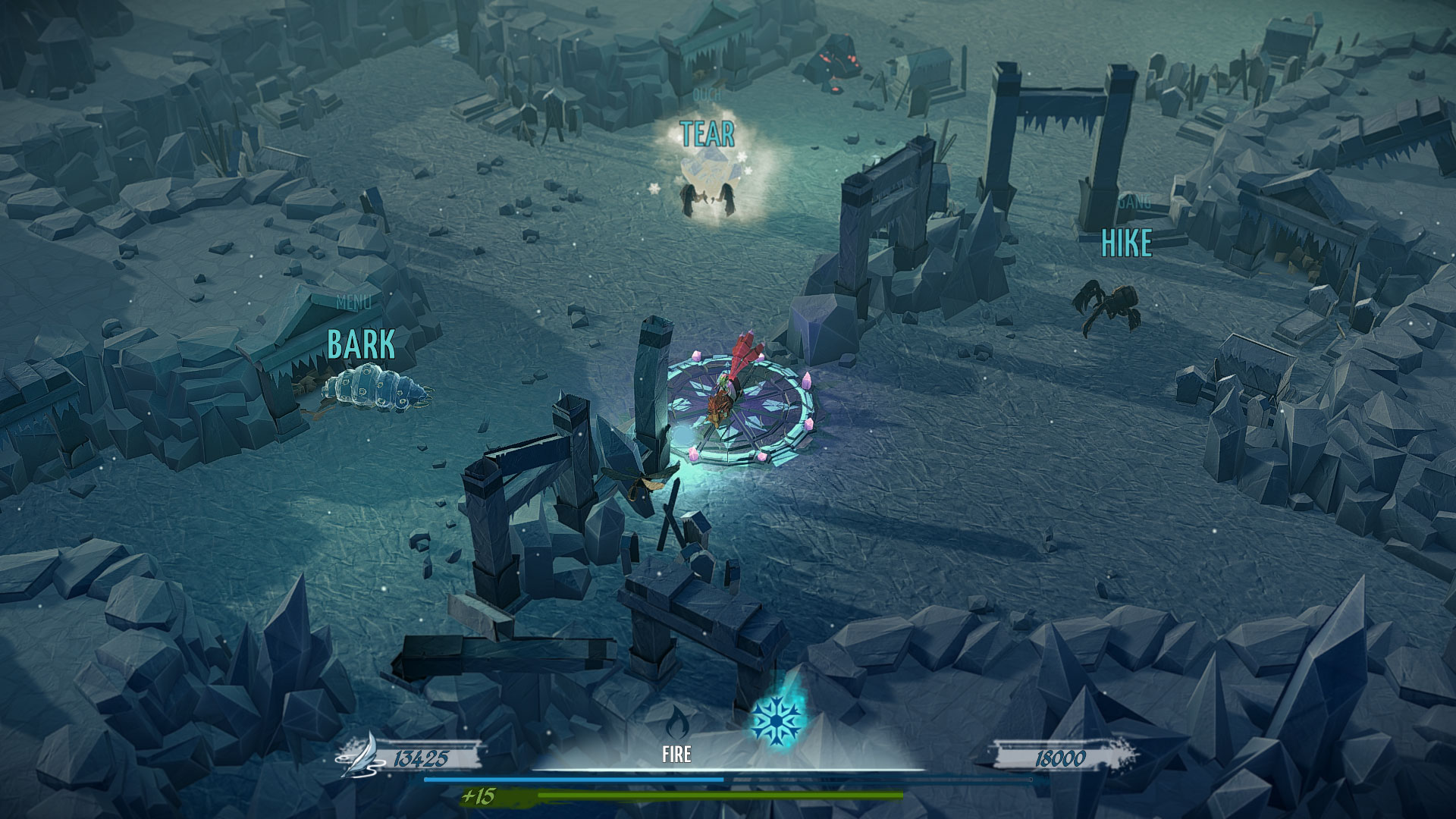
Epistory is a full paid game on Steam (often on sale for a few dollars) where you ride a fox through a paper world and fight by typing. The only typing game good enough to play for its own sake; it adapts difficulty to your speed.
Typing for programmers
Typing.io
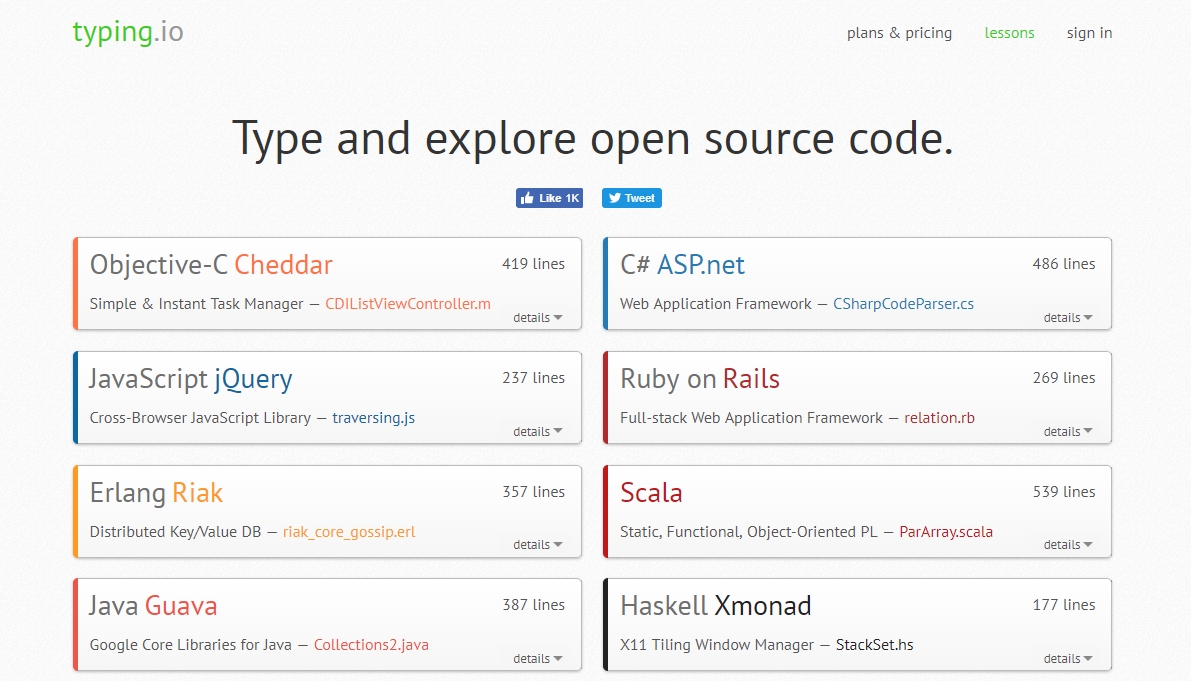
Typing.io has you type real source code from open source projects in your language of choice, so you drill brackets, underscores and symbols that normal tests skip. Free for a limited set of lessons, paid for the full library. Monkeytype’s code mode is a free alternative.
Desktop software: TIPP10
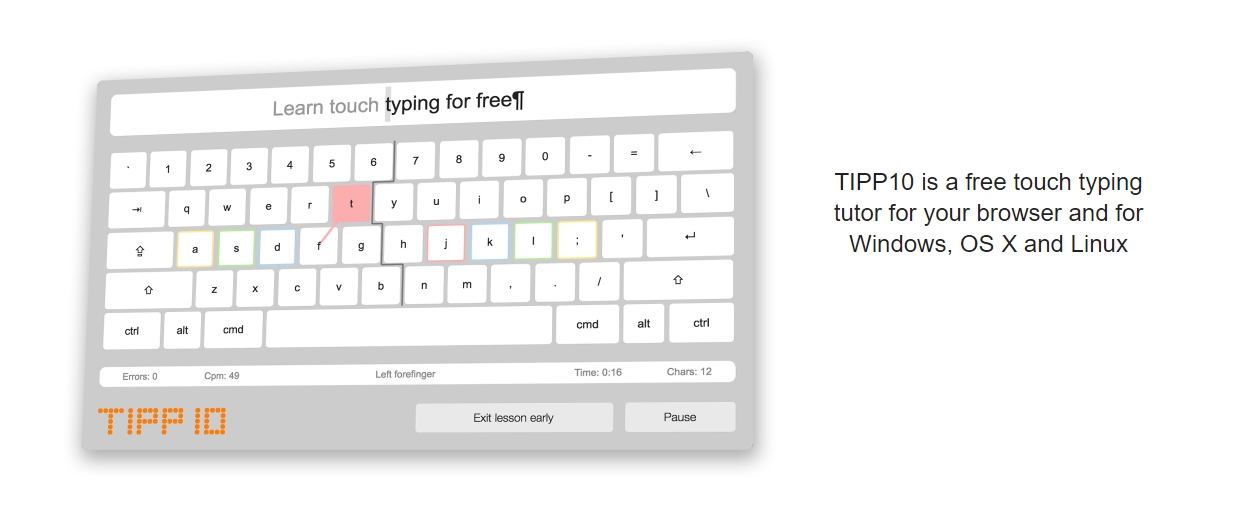
TIPP10 is a free, open source typing tutor for Windows, Mac and Linux that also runs in the browser. Its lessons are built around your error statistics, similar to Keybr, and it works offline. Good for anyone who does not want to practice inside a browser tab.
A 30 day plan to learn typing
- Days 1 to 7: learn the keys. TypingClub or Typing.com, 15 minutes a day, through the home row, top row and bottom row lessons. Do not look at the keyboard. Speed will drop below what you had before; that is normal.
- Days 8 to 21: accuracy. Keybr, 15 minutes a day. Aim for 97 percent accuracy before caring about speed. Unlock all letters by the end of week three.
- Days 22 to 30: speed. Monkeytype, 10 minutes of 30 second tests plus one 60 second test on 10FastFingers at the end of each week to log progress.
- After day 30: keep doing five minutes on Monkeytype before work. Most people plateau around 60 to 70 WPM without deliberate practice, which is plenty.
Tips that make the biggest difference
- Sit with your wrists floating, not resting on the desk, and keep your fingers on the home row (A S D F, J K L ;).
- Slow down when you make errors. Speed comes from not having to correct.
- Learn the shortcut keys you use daily (Ctrl+C, Ctrl+V, Ctrl+Z, Alt+Tab) with the correct fingers; they count as typing too.
- Cover the keyboard or turn the lights down if you keep looking. Some people put a cloth over their hands for a week.
- Practice on the keyboard you actually use. Switching between a laptop and a mechanical keyboard changes your speed by 10 to 20 percent until you adjust.
FAQ
What is the best free website to learn typing?
TypingClub for lessons from zero, Keybr for accuracy, Monkeytype for speed. All three are free without an account.
How long does it take to learn touch typing?
Two to four weeks of 15 minutes a day to stop looking at the keyboard, and two to three months to get comfortable at 50 plus WPM.
Is there a good free typing course for adults?
Typing.com and TypingClub are used by adults as much as by schools; the lessons are not childish. TIPP10 is a good adult oriented desktop option.
What is a good typing speed?
40 WPM is average, 60 to 70 is good, 80 plus is fast. Accuracy above 95 percent matters more than any of these numbers.
Can I learn typing on a phone or tablet?
Not touch typing. These sites need a physical keyboard. A Bluetooth keyboard paired with a tablet works fine.
Found this useful?

Sumit
ContributorHi, I'm Sumit, Being an introvert I have always been obsessed with technology-computers and reading dozens of posts to learn, find answers out of my curiosity. I love to write as I explore more.